This review is one of a pair. During a single Peru itinerary I stayed at both Cusco Marriott properties — the Palacio del Inka (this review) and the JW Marriott Cusco. Both are covered separately, with a direct comparison at the end of each. Both reviews also connect to the Tambo del Inka, Sacred Valley review, which explains the altitude acclimatisation strategy that makes the sequencing of these stays important.
There are two Marriott Bonvoy properties in Cusco worth considering for a serious stay in the former Inca capital, and I could not decide between them. The solution — to stay at both, on the two passes through Cusco that the Sacred Valley itinerary naturally produces — was partly practical and partly a genuine exercise in comparison. The Palacio del Inka was the first stop, and it set a high standard.
The hotel is built into a colonial mansion that dates to the sixteenth century, constructed — as most of Cusco's Spanish colonial buildings were — on foundations of Incan stonework that survived the conquest and provided the only masonry precise and durable enough to support new construction. The building sits adjacent to the Qorikancha, the great Inca sun temple whose own foundations underpin the Church of Santo Domingo immediately next door, and the layered history of the site — Incan, colonial, modern — is legible in the hotel's architecture in a way that is specific to Cusco and impossible to fabricate.
The corridors: a hotel built for walking slowly
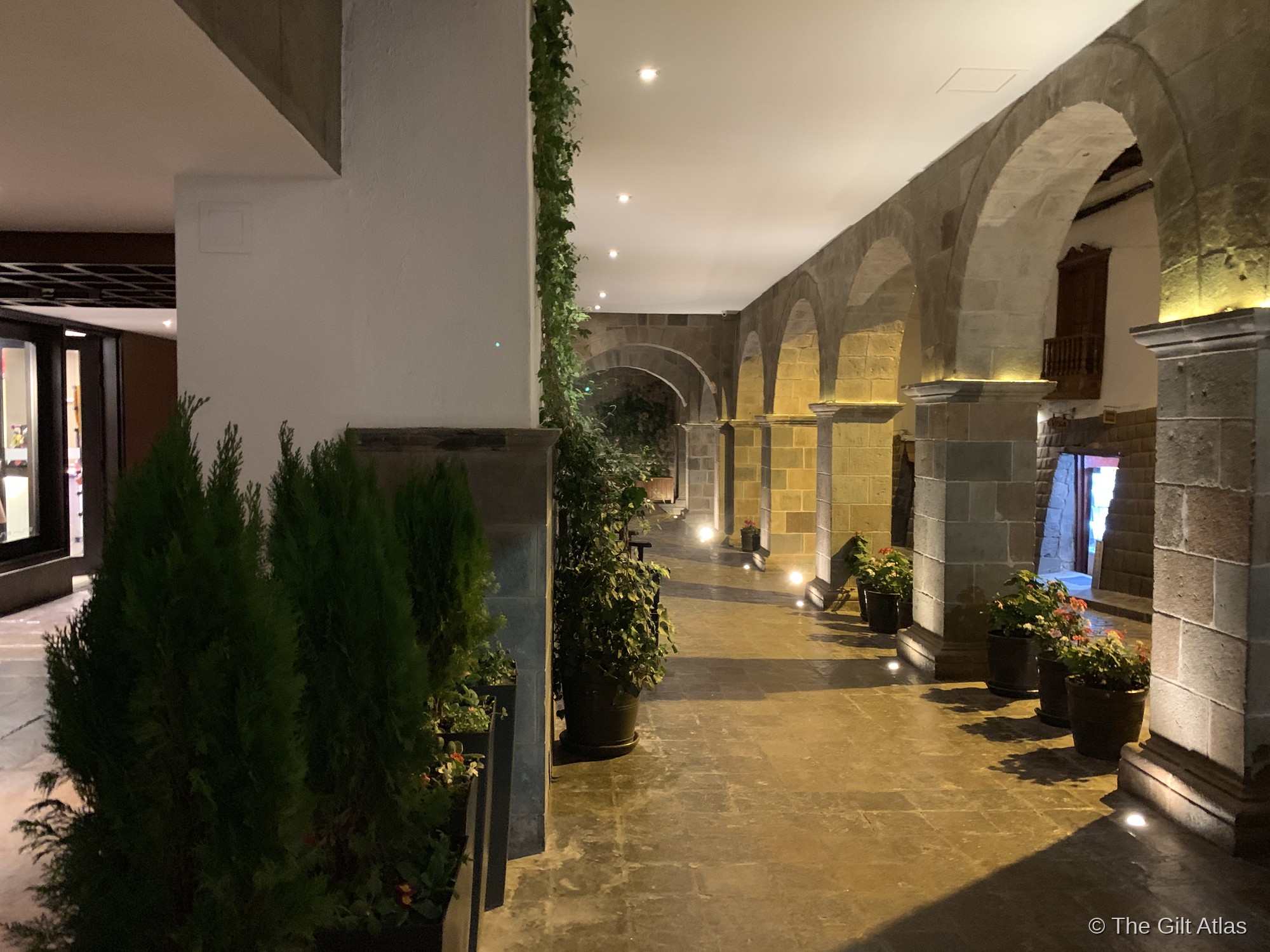
There are hotels where the common areas exist to move guests between their rooms and the amenities, and there are hotels where the common areas are destinations in their own right. The Palacio del Inka belongs firmly to the second category. The corridors — colonial arched walkways, stone-flagged, lined with art and artefact — are genuinely pleasurable to walk, and strolling them with no particular destination in mind is one of the recurring pleasures of a stay here. At altitude, where a leisurely pace is both medically advisable and culturally appropriate to Cusco, this quality of a hotel that rewards slow movement is not a trivial one.
Five centuries of Cusco history under one roof
The Palacio del Inka occupies a sixteenth-century colonial mansion built on original Incan stonework foundations — the same precisely fitted ashlar masonry that characterises the most significant structures of the Inca Empire and that can be seen, at street level, throughout the historic centre of Cusco. The Spanish colonial architecture above those foundations — carved wooden balconies, arched cloisters, whitewashed walls — gives the hotel a character that is distinct from the Tambo del Inka's more explicitly pre-colonial aesthetic: this is the Cusco of the Viceroyalty, layered over the Cusco of the Incas, and both layers are present in every room.
The colonial feel permeates the entire property — from the arched corridors worth strolling for their own sake to the lobby, which manages to feel like the kind of place you want to sit in rather than pass through. At 3,400 metres, where the thin air recommends a slower pace regardless, the hotel's architecture supports exactly the kind of unhurried movement that makes for a good acclimatisation day. Walk the corridors. Sit in the lobby. Let the altitude do what it does and let the building be company while you wait.
The courtyard: and the morning the llamas arrived
The courtyard at the Palacio del Inka is beautiful — a colonial interior garden of the kind that the great Cusco mansions all possessed, enclosed by the hotel's arched walkways and open to the Andean sky above. It is a space that earns genuine time spent in it: a place for a morning coffee, a quiet afternoon, a pause between the exertions of sightseeing at altitude.
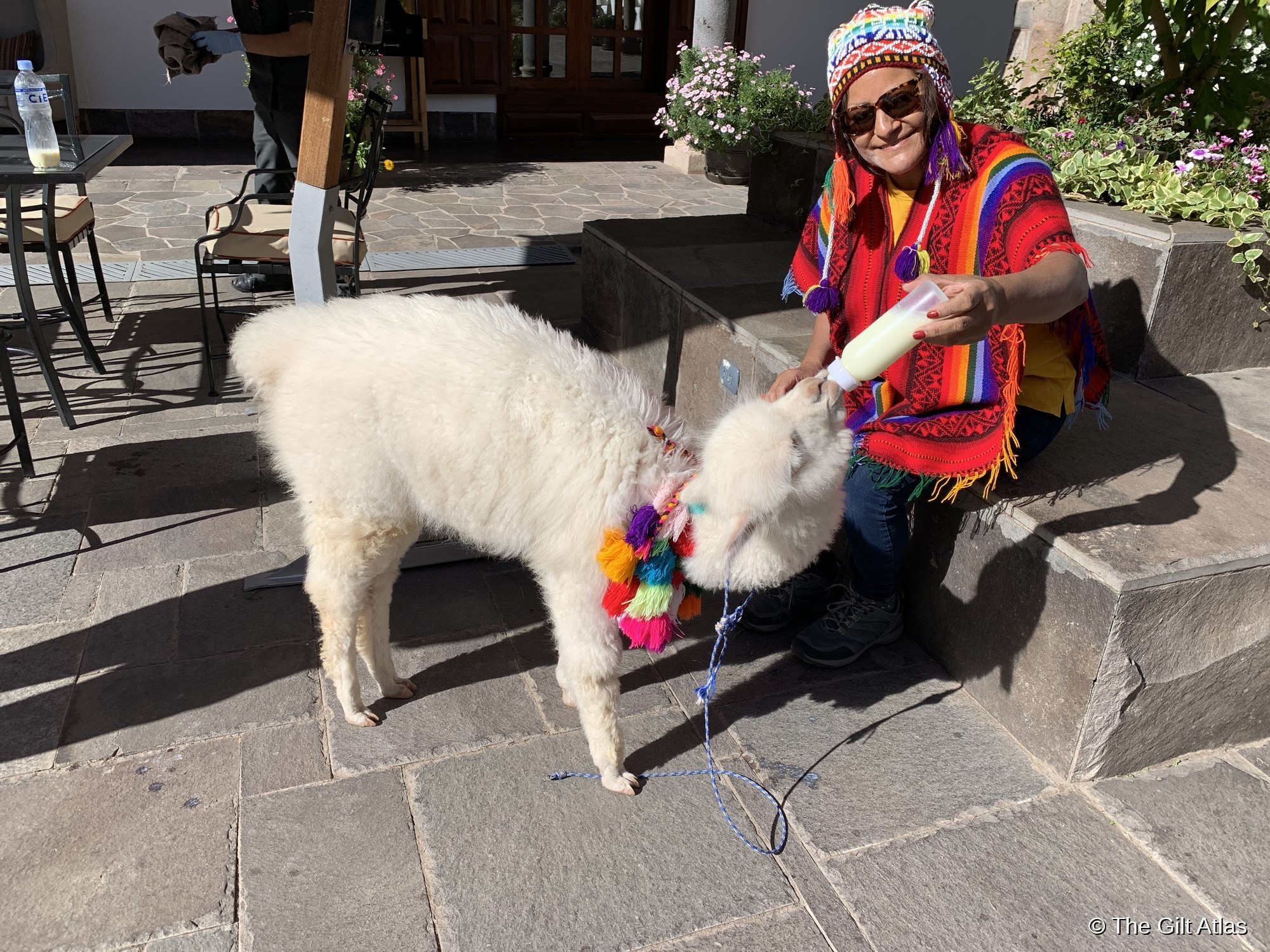
On one morning during the stay, the hotel had baby llamas in the courtyard. This is the kind of detail that sounds whimsical in description and is, in practice, completely charming — small, curious, entirely at home in the Andean colonial setting in a way that makes immediate and obvious sense. The Palacio del Inka's courtyard is the right place for a baby llama. The combination of the colonial architecture, the altitude light, and the animals standing there as though they had always been part of the furniture is one of those travel moments that no amount of planning produces and no photograph quite captures. It is simply one of those things that happens at a hotel like this, in a place like Cusco.
Breakfast: complimentary, excellent, and worth the morning
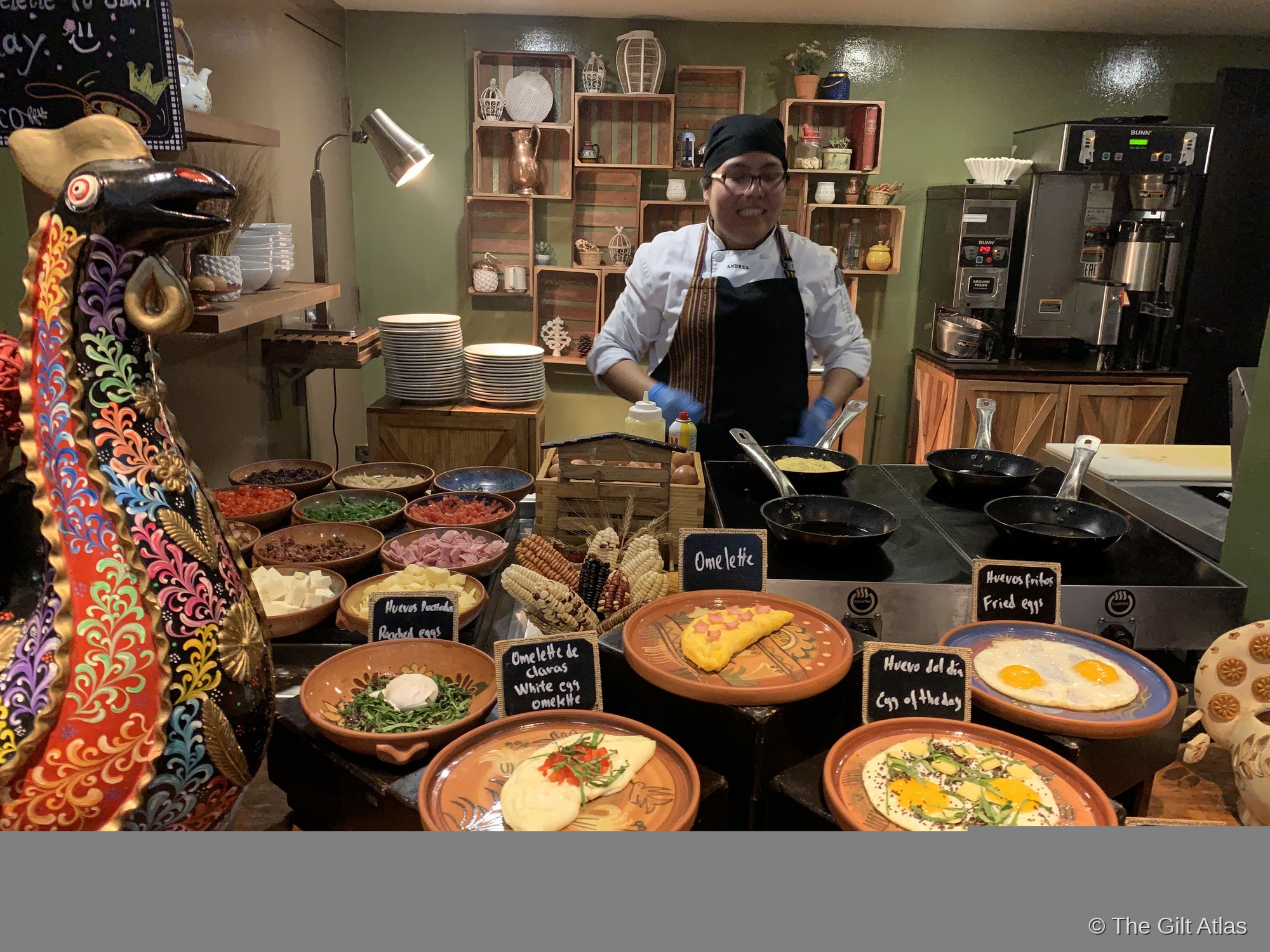
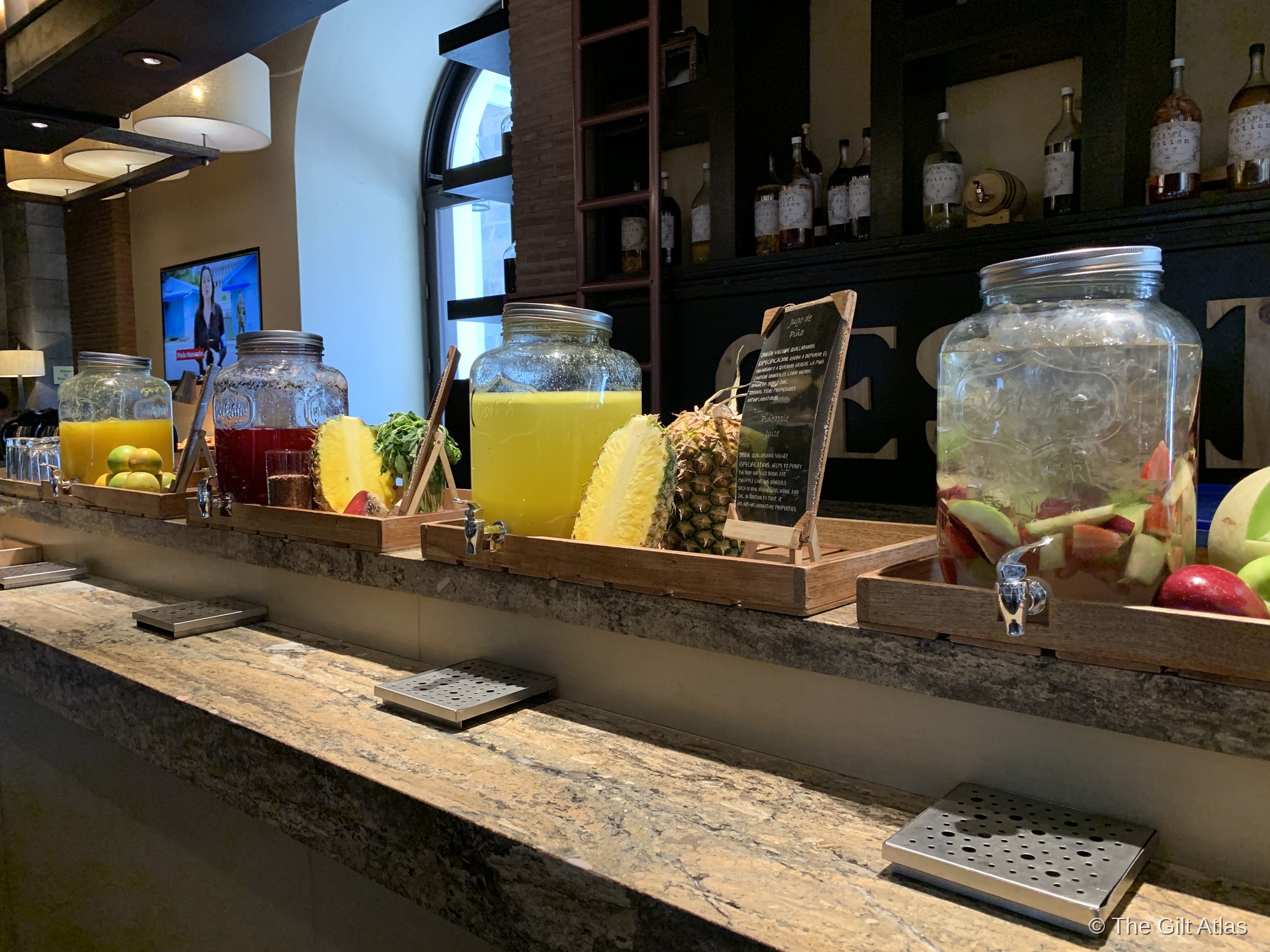
Breakfast at altitude matters more than breakfast at sea level. Your body is working harder at 3,400 metres, your appetite may be unpredictable if you are still acclimatising, and the morning meal is the fuel for a day of walking a city that sits on steep hillsides and demands more physical effort than it appears to. The Palacio del Inka's breakfast is complimentary for Marriott Bonvoy elite members and it is excellent — a full spread that covers both Peruvian staples and more familiar international options, served in a setting that makes the meal worth extending beyond necessity.
Complimentary for elite members — and worth it
The hotel's breakfast program is one of the strongest elite-member benefits in the Bonvoy portfolio at this property tier. Complimentary for Bonvoy Gold, Platinum, Titanium, and Ambassador members, the breakfast includes a broad selection of Peruvian dishes alongside international options — quinoa preparations, fresh tropical fruits at altitude, local breads and pastries, egg dishes, and the coca tea that is both culturally appropriate and physiologically sensible at 3,400 metres. The setting — in the hotel's historic dining room, with the colonial architectural character of the building as backdrop — elevates the experience beyond what the food alone would achieve. This is a breakfast worth taking slowly.
Location: good, but not the centre
The Palacio del Inka's location in Cusco is genuinely good — in the historic centre, adjacent to the Qorikancha, within easy walking distance of the Plaza de Armas and the city's major sights. It is not, however, as centrally positioned as the JW Marriott, which sits just a few blocks from the main square itself. For guests whose primary interest is in having the Plaza de Armas immediately accessible — for early morning visits before the tour groups arrive, for evening walks around the square — the JW Marriott's location is meaningfully more convenient.
For guests whose interest is in the Qorikancha specifically, or who prefer a slightly quieter position in the historic centre, the Palacio del Inka's location is entirely satisfactory. The difference between the two hotels' locations is a matter of a few minutes' walk, but those minutes are uphill at altitude, and they matter more than they would at sea level.
Palacio del Inka vs. JW Marriott Cusco
"I enjoyed strolling the corridors in a way that I rarely enjoy strolling hotel corridors. At altitude, where every step is slightly more considered than at sea level, this turns out to matter more than expected."
— From the notebook, CuscoThe verdict
The Palacio del Inka is one of the most atmospherically correct hotels in South America — a property whose building, location, and character align with where it is in a way that the best Luxury Collection properties achieve and most hotels in heritage cities do not. The corridors are worth your time. The courtyard is beautiful. The breakfast is excellent and complimentary. The rooms are comfortable. The colonial-over-Incan character of the architecture places you, physically and atmospherically, inside Cusco's layered history rather than adjacent to it.
Its one comparative weakness against the JW Marriott is location — fractionally less central, a few extra minutes' walk from the Plaza de Armas that matter slightly at 3,400 metres. Whether that trade-off is worth making in favour of the JW Marriott's position and oxygen rooms is a genuine question, and one that both reviews together are designed to help answer. For the historically and atmospherically inclined, the Palacio del Inka is the correct choice.
The most atmospherically immersive hotel in Cusco — a Luxury Collection property built into a genuine colonial mansion on Incan foundations, with corridors worth strolling, a courtyard that occasionally hosts baby llamas, an excellent complimentary elite-member breakfast, and the kind of lobby you want to sit in rather than pass through. The JW Marriott offers a slightly more central position and the unique option of in-room oxygen; the Palacio del Inka offers something harder to define and harder to replicate: the genuine sensation of being inside Cusco's history rather than simply visiting it.
Affiliate disclosure: Some links in this article are affiliate links. If you book through them, The Gilt Atlas may earn a small commission at no additional cost to you. This stay was booked independently using Marriott Bonvoy points. The hotel had no involvement in this review and no editorial oversight.