This review is one of a pair. During a single Peru itinerary I stayed at both Cusco Marriott properties — the JW Marriott (this review) and the Palacio del Inka, a Luxury Collection Hotel. Both are covered separately, with a direct comparison at the end of each. Both reviews also connect to the Tambo del Inka, Sacred Valley review, which explains the altitude acclimatisation strategy that makes the sequencing of these stays important.
The JW Marriott Cusco and the Palacio del Inka represent two distinct philosophies for how to approach luxury hospitality in a city that sits at 3,400 metres in the Andes and whose historical and architectural heritage is among the richest in the Americas. The Palacio del Inka's approach is immersion — a colonial mansion on Incan foundations, corridors that reward strolling, an atmosphere that places you inside Cusco's history. The JW Marriott's approach is position and provision — the most central major hotel address in the city, a broader contemporary comfort, and one practical amenity that no other hotel I have stayed in anywhere in the world offers.
That amenity — in-room oxygen supplementation, available on request — is the most useful single feature of any hotel I have encountered at altitude, and it deserves to be discussed at length before anything else about this property.
Oxygen rooms: the amenity that changes everything at 3,400 metres
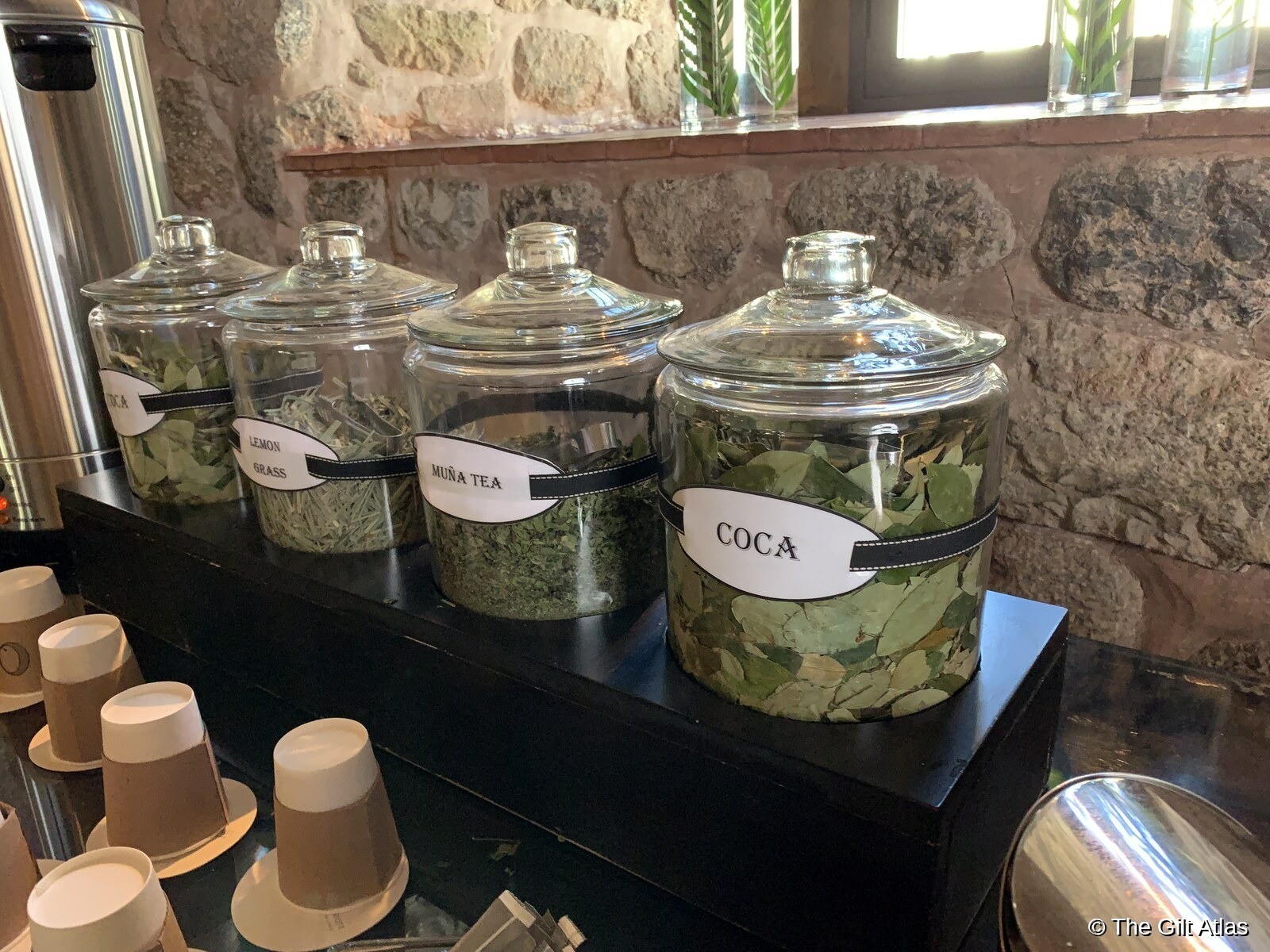
Altitude sickness is the variable that dominates any stay in Cusco. At 3,400 metres above sea level, the partial pressure of oxygen in the air is approximately 67% of what it is at sea level. Your body compensates — but the compensation takes time, typically 48 to 72 hours of meaningful acclimatisation, and during that window the symptoms of acute mountain sickness (headache, nausea, fatigue, disrupted sleep, shortness of breath on exertion) range from mildly inconvenient to debilitating. Medication helps. Coca tea helps. Moving slowly and drinking water helps. But none of these interventions directly addresses the underlying variable, which is that the air in your room contains less oxygen than your body is calibrated for.
The JW Marriott Cusco addresses this directly. On request, the hotel will pump additional oxygen into your room — raising the oxygen concentration toward sea-level equivalency and allowing you to sleep, rest, and recover in an environment that your body can process without the physiological stress of altitude. I am not aware of any other hotel, anywhere in the world, that offers this as a standard guest amenity.
In-room oxygen supplementation — what it is and why it matters
The practical value of sleeping in an oxygen-supplemented room on your first night in Cusco — or on any night when altitude symptoms are affecting your sleep — is difficult to overstate. Disrupted sleep is one of the most common and most debilitating effects of altitude, and it compounds: a bad first night leaves you more susceptible to symptoms on the second day, which leads to another disrupted night, and so on. The ability to request an oxygen-enriched room at any point during a Cusco stay is a meaningful practical advantage over any hotel that does not offer it.
For travellers who have experienced altitude sickness on previous trips to high-elevation destinations, or who are uncertain about their tolerance at 3,400 metres, this feature alone may be the deciding factor in choosing the JW Marriott over the Palacio del Inka. Combine it with the altitude acclimatisation strategy described in the Tambo del Inka review — arriving in the Sacred Valley first, spending two to three days at lower altitude before ascending to Cusco — and you have the best possible preparation for a comfortable stay at the city's elevation.
Location: the most central major hotel in Cusco
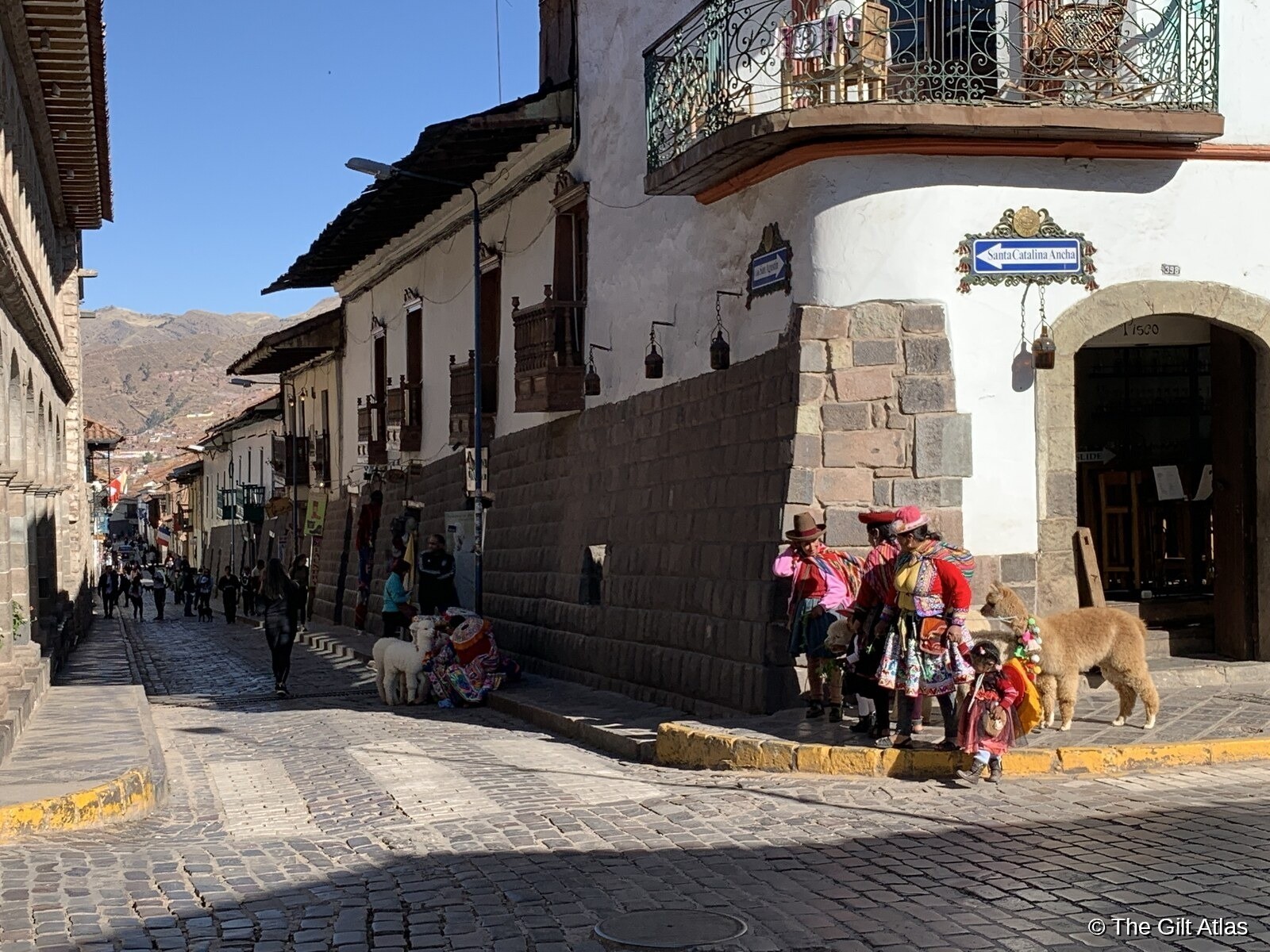
The JW Marriott Cusco sits a few blocks from the Plaza de Armas — the main square of the former Inca capital, surrounded by the Cathedral, La Compañía de Jesús, colonial arcades, and the constant movement of one of South America's most visited city centres. This proximity is meaningful in practical terms: the Plaza de Armas is the orienting centre of Cusco life, the departure point for most city walks and tours, and the evening gathering place that any visitor to Cusco will find themselves returning to repeatedly. Being within a few minutes' walk of it, rather than ten or fifteen minutes away at altitude, is a genuine advantage.
Cusco from the JW Marriott's front door
The hotel: comfort, contemporary Andean design, and a candid observation
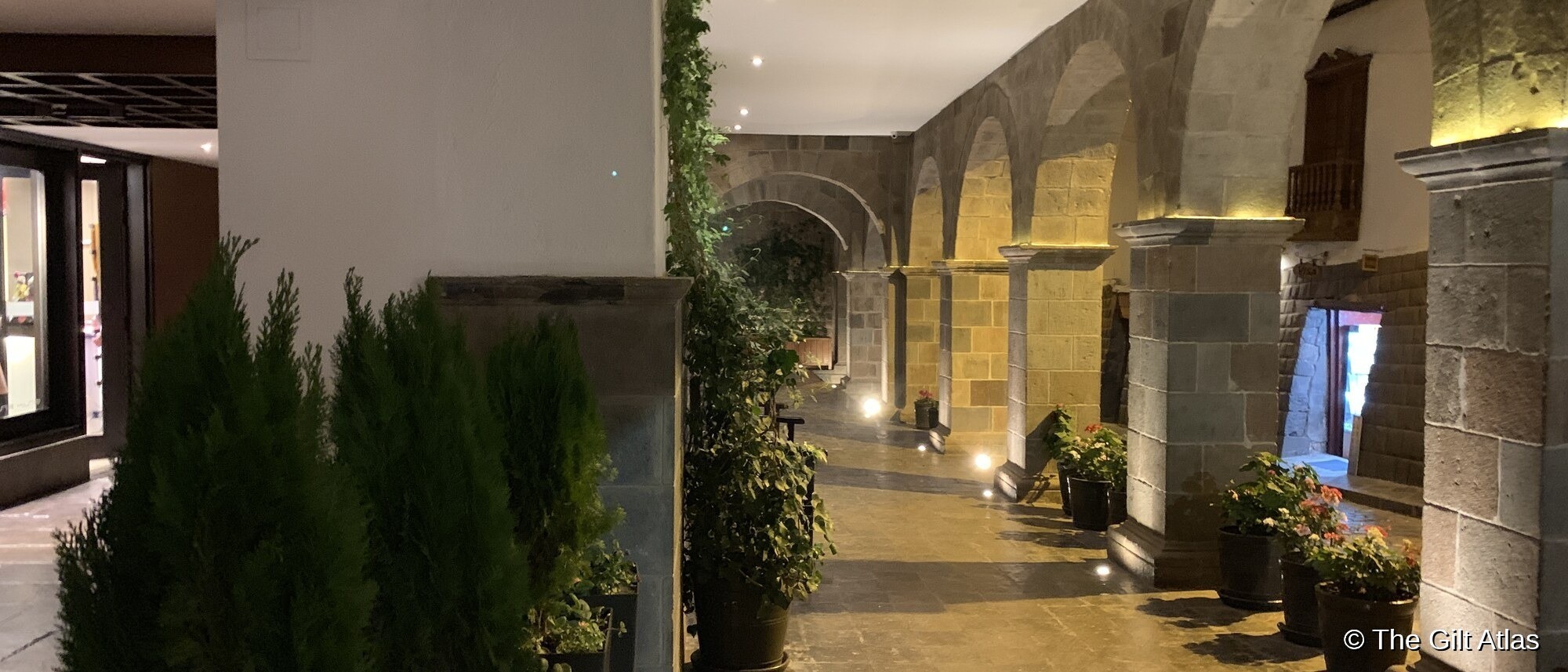
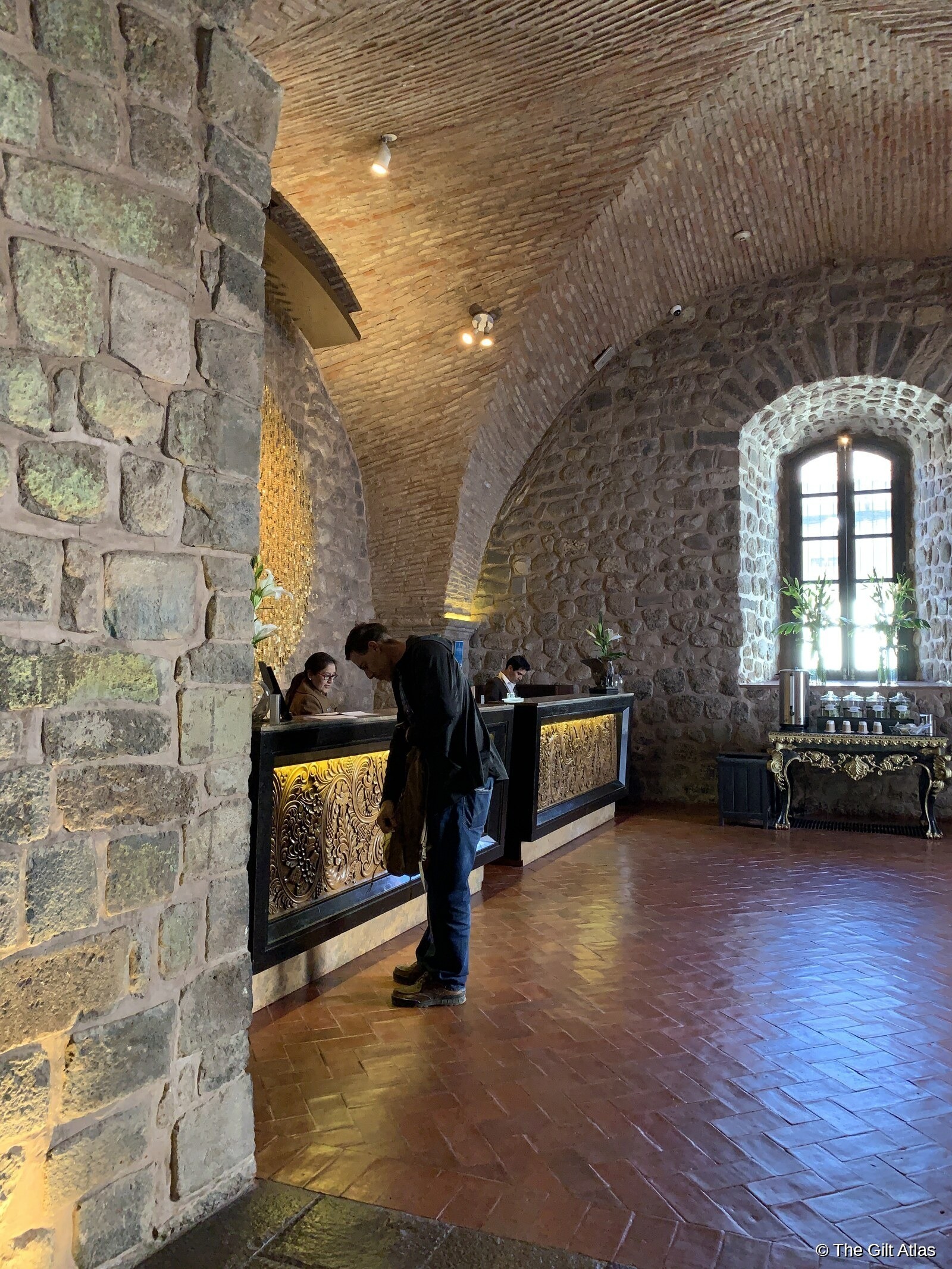
The JW Marriott Cusco delivers what the JW Marriott brand consistently delivers: well-appointed rooms, attentive service, reliable food, and a hotel environment that functions smoothly at a high level of comfort. The design incorporates Andean motifs and materials in a way that is contemporary and well-executed, though it reads as less historically immersive than the Palacio del Inka's genuine colonial architecture. This is an honest observation rather than a criticism — the JW Marriott is a purpose-built luxury hotel with Andean design references, where the Palacio del Inka is a sixteenth-century colonial mansion that has been adapted for luxury hospitality. They are different things, and the comparison is not quite fair to either.
What the JW Marriott has, the Palacio del Inka does not: the oxygen rooms, the more central location, and the particular comfort of knowing that the most practical altitude amenity available anywhere in Cusco is a phone call away. What the Palacio del Inka has, the JW Marriott does not: the corridors, the colonial character, the courtyard, and the sense of being inside the history of the city rather than comfortably adjacent to it. Both are great places to stay. The choice between them is a genuine one.
JW Marriott Cusco vs. Palacio del Inka
"The oxygen rooms are not a gimmick. At 3,400 metres, a night in a room where the air is closer to what your body expects is a genuinely different experience from a night without it."
— From the notebook, CuscoThe verdict
The JW Marriott Cusco is an excellent hotel that offers the most useful single altitude amenity available at any property in the city, the most central location of any major Cusco hotel, and the reliable comfort and service consistency of the JW Marriott brand. Its design is contemporary and well-executed, though it lacks the historical depth and atmospheric character of the Palacio del Inka. Both properties are worth staying at — the two-stay itinerary that the Sacred Valley route naturally enables makes it possible to experience both, and I would recommend exactly that to anyone whose Bonvoy status makes it feasible.
If forced to choose: guests who have experienced altitude sickness before, or who are uncertain about their high-altitude tolerance, should choose the JW Marriott for the oxygen rooms alone. Guests whose primary concern is atmosphere and historical immersion should choose the Palacio del Inka. I would not hesitate to stay in either again.
The most centrally located major hotel in Cusco, with the only in-room oxygen supplementation program I am aware of at any hotel anywhere — a practical altitude amenity that changes the experience of sleeping at 3,400 metres and that alone may be the deciding factor for many guests. Comfortable, well-run, and reliably JW Marriott in quality. Less atmospherically immersive than the Palacio del Inka, but more centrally positioned and uniquely equipped for the physiological demands of Cusco's altitude. If you are choosing between the two: the oxygen decides it for altitude-sensitive travellers; atmosphere and character decides it for everyone else. Both are excellent. Stay at both if the itinerary allows.
Affiliate disclosure: Some links in this article are affiliate links. If you book through them, The Gilt Atlas may earn a small commission at no additional cost to you. This stay was booked independently using Marriott Bonvoy points. The hotel had no involvement in this review and no editorial oversight.