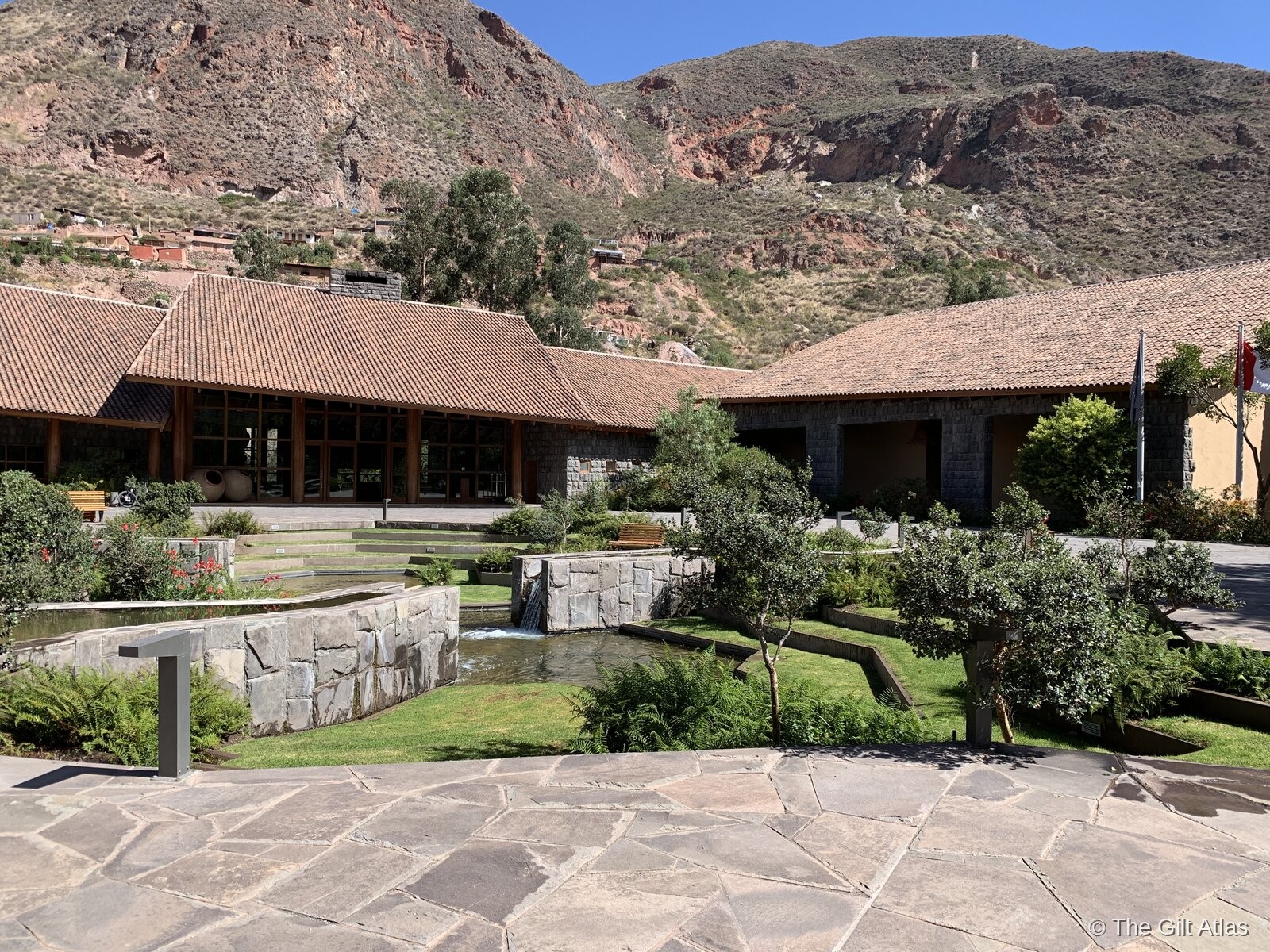
There are hotels that occupy good locations, and there are hotels whose location is so strategically correct that they become essential to the trip rather than simply part of it. Tambo del Inka, a Luxury Collection Resort & Spa in the Valle Sagrado del Inca, belongs to this second category. It sits in the heart of Peru's Sacred Valley, midway between Cusco and Machu Picchu, at an altitude meaningfully lower than either — with its own private train station on the grounds that provides the shortest and most direct rail connection to Aguas Calientes. For anyone planning a serious itinerary of the region, the case for basing yourself here rather than in Cusco is both practical and physiological, and it is worth making at some length before discussing the hotel itself.
The hotel is excellent. The Incan-inspired design, the Urubamba River along its grounds, the quality of the food, the comfort of the rooms — all of it works, and all of it will be covered here. But the location, and specifically what the hotel's location means for how you experience the altitude of this part of Peru, is the reason to book Tambo del Inka first.
Altitude: the most important thing most visitors don't plan for
Altitude sickness — soroche in Quechua and Spanish — is real, it is common among visitors to the Cusco region, and it is substantially more manageable than most first-time visitors to Peru anticipate, provided you approach it with a sensible acclimatisation strategy. The key is gradation: arriving at altitude incrementally rather than flying directly into Cusco and attempting to sightsee immediately at 3,400 metres.
Tambo del Inka sits at approximately 2,863 metres above sea level — roughly 540 metres lower than Cusco, and a few hundred metres lower than the main ruins at Machu Picchu. This difference is not trivial. It is the difference between a first night at altitude that is genuinely uncomfortable and a first night that allows your body to begin adjusting before you ascend further. The strategy that this geography enables is one of the most valuable pieces of practical advice I can offer for this itinerary.
The altitude strategy that makes or breaks this itinerary
The recommended sequence: Fly into Cusco, transfer immediately to the Sacred Valley and Tambo del Inka without attempting to sightsee in Cusco first. Spend one to two nights at Sacred Valley altitude before taking the train to Aguas Calientes and ascending to Machu Picchu. Return to the Sacred Valley, then — once your body has had several days to adjust — spend time in Cusco at the end of the trip. Do not attempt to spend your first night at Cusco's altitude (3,400m) before acclimating at a lower elevation first. The Sacred Valley's 2,863m provides the step that makes all subsequent altitude manageable, and Tambo del Inka provides the best base at that altitude you will find in the region.
The train station: a private platform, a shorter journey
There is a train station on the grounds of Tambo del Inka. Not a nearby station, not a station a short taxi ride away — a station that is a few minutes' walk from the hotel entrance, served by PeruRail trains connecting Urubamba directly to Aguas Calientes at the base of Machu Picchu. This is a significant practical advantage, and it is worth understanding in the context of the alternatives.
Most visitors to Machu Picchu who are based in Cusco must travel overland to Ollantaytambo — a 1.5 to 2 hour drive from Cusco through the Sacred Valley — before boarding a train that takes another 1.5 hours to reach Aguas Calientes. The total journey time from Cusco to Aguas Calientes is typically three to four hours each way. From Tambo del Inka, you walk to the station and board the train. The saving in time and logistical complexity is substantial, and on a trip where most days involve an early departure toward a major site, the difference between a 5am car transfer and a walk across the hotel grounds to a waiting train is not a small one.
The private train station — what it means in practice
The Sacred Valley as a base: Incan sites in every direction
Tambo del Inka's position in the Valle Sagrado places it within easy reach of the valley's major archaeological sites — a concentration of Incan ruins, terraced hillsides, and living Andean communities that represents some of the most significant and best-preserved pre-Columbian heritage anywhere in South America. A stay of three to four nights in the Sacred Valley, using the hotel as a base, is enough time to reach Machu Picchu and visit the valley's key sites without the logistical burden of transferring hotels between each destination.
The Sacred Valley's key sites by car
"The Sacred Valley from a car window on a clear morning — terraces cut into every hillside, the Urubamba threading below, the snow peaks above — is one of the great drives in South America."
— From the notebook, Valle SagradoThe hotel: Incan design, river grounds, and a kitchen that earns its setting
The hotel itself deserves its own discussion, separate from the location advantages that make it the region's most strategically compelling base. Tambo del Inka is a genuinely beautiful property — designed with a sensitivity to its Andean context that goes beyond decorative gesture and into the structural and material character of the building itself.
Traditional Andean design, modernly executed
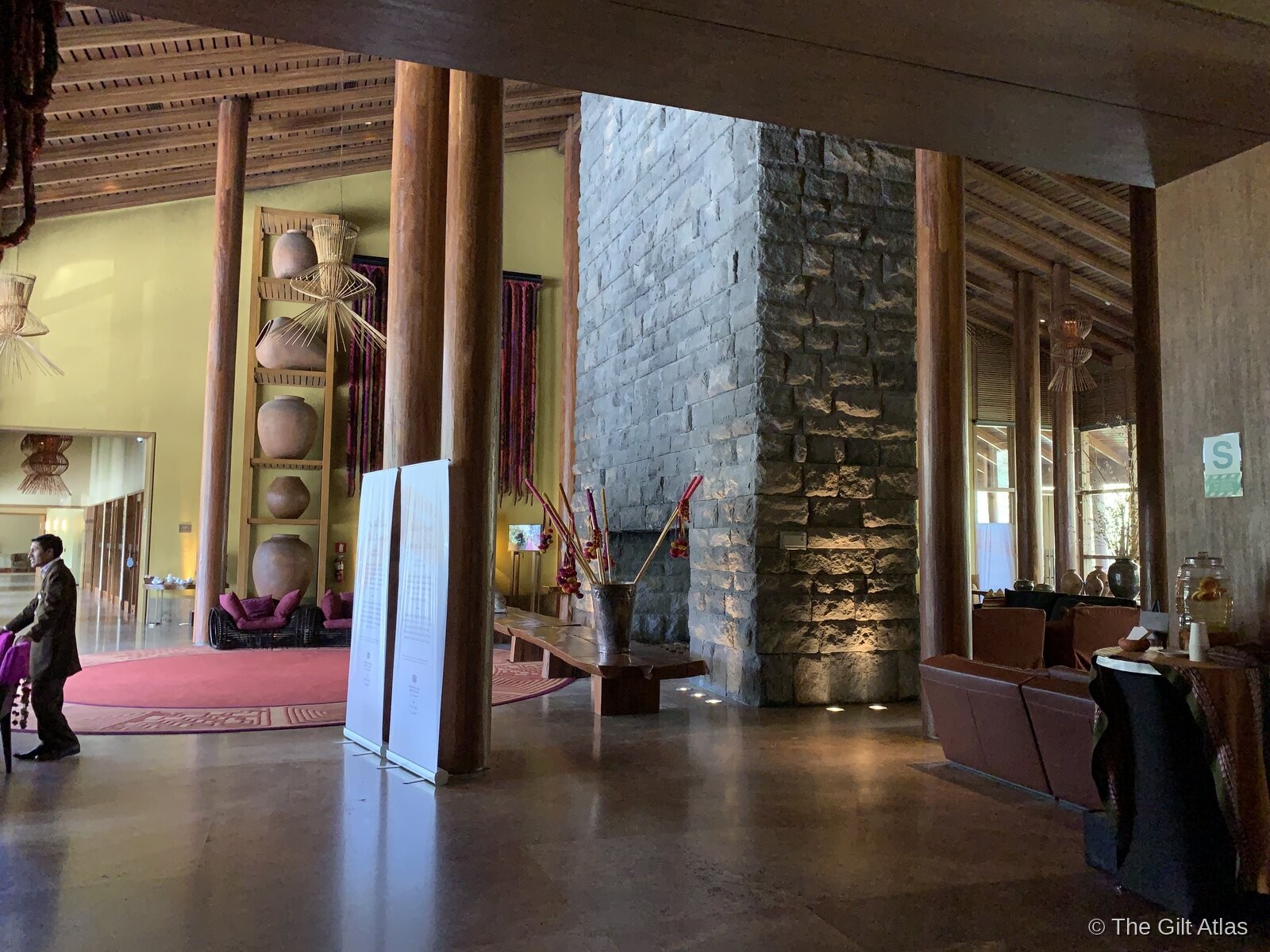
The interior of Tambo del Inka draws on the architectural and material vocabulary of Incan construction — stone, textiles, and forms that reference the terracing and geometry of the valley's ancient sites — without resorting to the heavy-handed theme-park interpretation that lesser properties in heritage settings often produce. Walking through the hotel feels like a step backward in time to a particular version of the Andean world: not a museum reconstruction, but a contemporary interpretation of the place's deep history that makes you more aware of where you are.
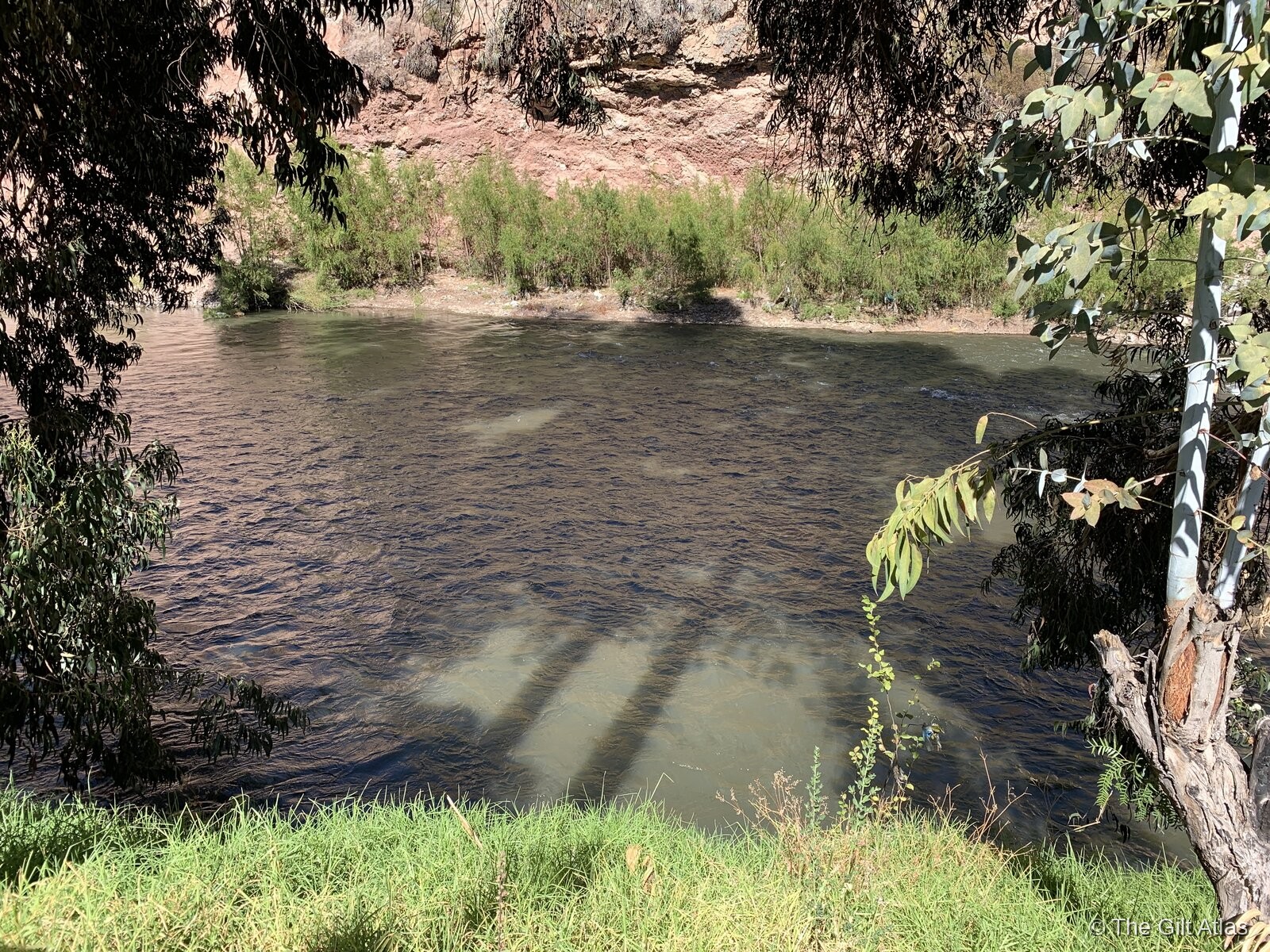
The Urubamba River runs along the eastern edge of the property, and the hotel's grounds are designed to bring guests close to it — paths along the riverbank, landscaping that frames the river views, and the particular ambient quality of a river running through a high Andean valley at altitude, which is unlike rivers anywhere else. Strolling the grounds in the early morning, with the mist on the water and the Andean peaks visible above the valley walls, is one of the stay's recurring pleasures.
The private train station, a short stroll from the main entrance, adds an almost surreal note of practical convenience to a property whose aesthetic suggests an older, slower-paced world. That the hotel manages to be both genuinely evocative of the Andean past and logistically superior to any other address in the valley is one of its most satisfying qualities.
Dining: breakfast and dinner done well
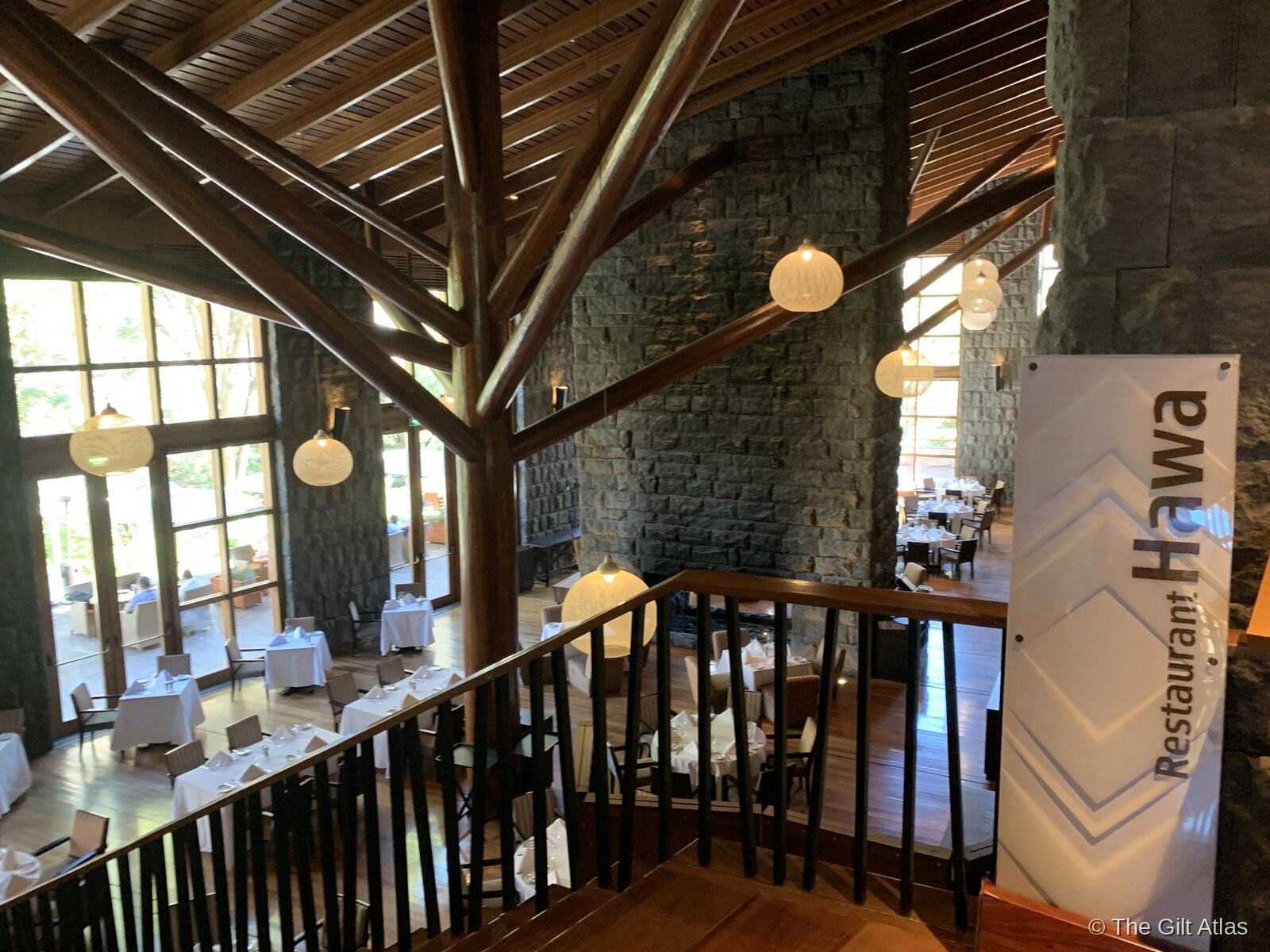
The restaurant at Tambo del Inka earns genuine praise for both its breakfast and dinner service. This matters more than it might at a hotel in a city with abundant dining options nearby — the Sacred Valley's culinary infrastructure outside the resort is limited, and guests who are spending long days in the field exploring archaeological sites return to the hotel with significant appetites and limited enthusiasm for driving elsewhere to eat. That the kitchen delivers consistently at both ends of the day makes the stay considerably more comfortable.
Breakfast at altitude has a particular importance: departing early for a long day at the ruins on an empty stomach is not advisable, and the hotel's morning offering is substantial enough to fuel a day of serious sightseeing. Dinner, after a day that may have included several hours of walking at Incan ruins or a round trip to Machu Picchu, is best encountered at a table that understands Peruvian culinary traditions and applies them competently — which the restaurant here does.
The verdict
Tambo del Inka is not merely the best hotel in the Sacred Valley. It is the most strategically intelligent choice for an itinerary that includes Machu Picchu, the valley's Incan sites, and Cusco — a property whose location, altitude advantage, and private train station make it the correct base for the entire region, and whose quality as a hotel would justify choosing it even if those practical advantages did not exist. The Incan-inspired design is among the most considered interpretations of its heritage context in the Luxury Collection portfolio. The river grounds are a recurring pleasure. The food is good. The rooms are comfortable.
The altitude strategy alone is worth the price of the booking. Stay here first, ascend gradually, and arrive at Machu Picchu and Cusco with enough physiological reserve to actually experience them.
The most strategically valuable hotel booking in the Cusco region — a Luxury Collection property whose private train station, altitude advantage, and central Sacred Valley position make it the correct base for any serious itinerary of the region. Stay here first, before Cusco, to acclimatise at a lower altitude in steps. Walk to the train station for the shortest connection to Machu Picchu. Drive to the valley's Incan sites. Return to one of the most beautifully designed hotels in the Marriott Bonvoy portfolio — with a river on the grounds, excellent food, and the Andes on all sides.