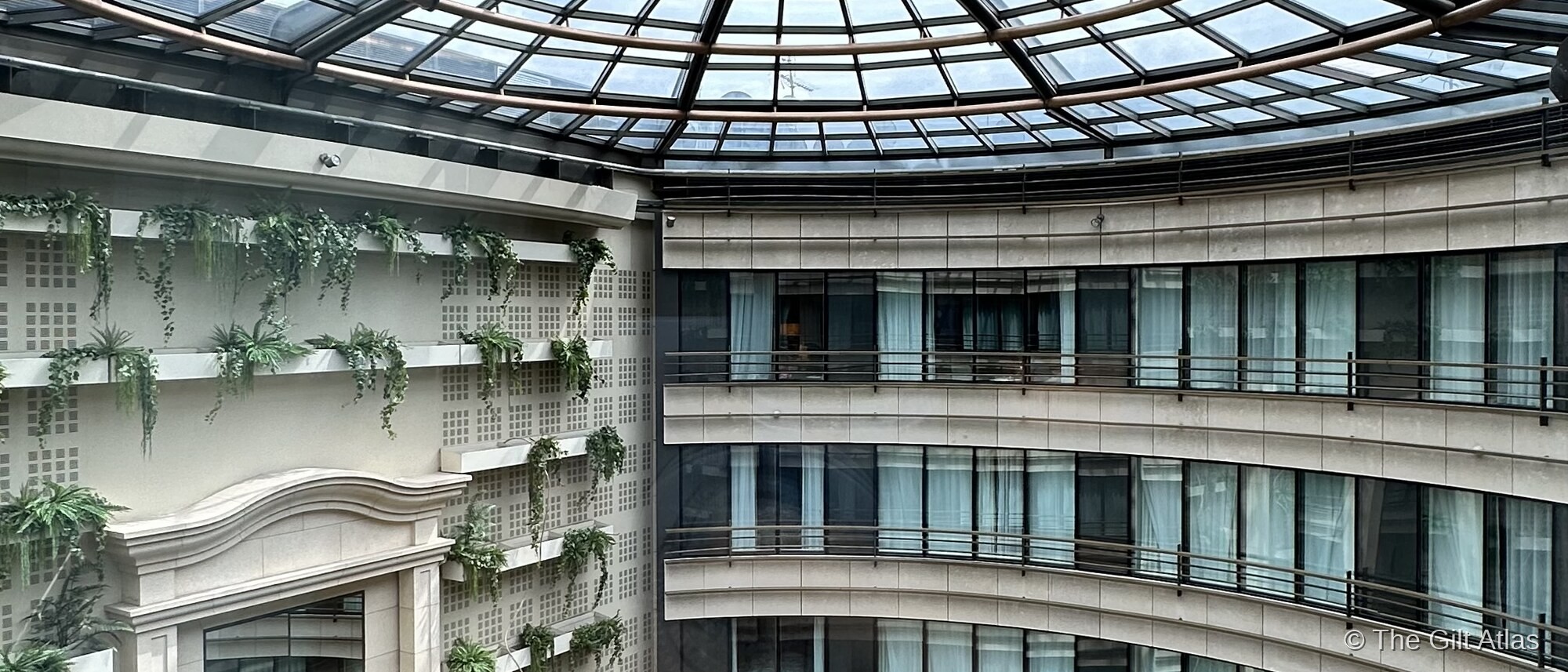
The Paris Marriott Champs Élysées does not require much explanation of its location. The name is the address. You are on the Champs-Élysées — the most famous avenue in the world, two kilometres of tree-lined boulevard running from the Place de la Concorde to the Arc de Triomphe, flanked by the finest shops, restaurants, and theatres in Paris. The Louvre is fifteen minutes on foot. The Eiffel Tower is twenty. Notre Dame is a pleasant walk across the Seine. For a visitor wanting to be in the centre of Paris, genuinely and without compromise, this is one of the finest addresses available on a Marriott Bonvoy redemption anywhere in Europe.
It also happened to be the address we were dragging our luggage toward on foot, across police barriers and through celebrating crowds, on the evening France won a football match and the city of Paris decided to close the entire street to vehicle traffic.
Let me tell both stories, because both are true and both matter.
The arrival: how not to manage a street closure
Approximately 24 hours before our arrival, the hotel sent a message. France was playing in a major football tournament. If France won, there would be a victory parade on the Champs-Élysées. The street might be closed. The hotel provided instructions on alternative arrival routes and an alternative entrance to use.
France won. The Champs-Élysées was closed. And the hotel's instructions were, as we discovered on arrival, essentially useless.
What actually happened on check-in night
I want to be clear about where the responsibility lies here — and where it does not. The city of Paris closing the Champs-Élysées for a national football victory celebration is not the hotel's fault. Events of this nature are genuinely outside any property's control, and expecting a hotel to prevent a street closure is unreasonable. What is entirely within the hotel's control is how it manages the consequences for its arriving guests: the accuracy of the alternative arrival instructions, the responsiveness of the front desk when called, and the presence of staff to assist guests who inevitably arrive on foot with luggage.
On all three of those measures, the hotel fell short. The instructions were inaccurate. The phone assistance was inadequate. No one was stationed at the alternative entrance to help. Arriving at a premium hotel with your arms full of luggage, having navigated a police cordon through a crowd of tens of thousands of celebrating football fans, without a single member of staff to greet you, is not the experience the Marriott Bonvoy elite program is supposed to deliver.
"The city closing the street was not their fault. The inaccurate instructions, the unhelpful phone line, and the empty back entrance — those were."
— From the notebook, ParisHaving navigated the chaos of arrival, we freshened up and went to the hotel bar — which happened to have a front-row view of the Champs-Élysées victory parade. The street was packed with hundreds of thousands of celebrating Parisians. The Arc de Triomphe was illuminated. The atmosphere was extraordinary. We had stumbled, entirely accidentally, into one of the great spontaneous celebrations that Paris produces every decade or so, and we watched it in comfort with a glass of wine. Travel rarely delivers the unexpected this well. The arrival was a disaster. The evening that followed was magnificent.
The location: everything the name promises
Set the arrival aside for a moment — which is easier to do once you are settled, sitting on the Champs-Élysées with Paris arranged around you — and the hotel's location is simply exceptional. The avenue itself is a destination, not just a route, and waking up in the morning and stepping out onto it provides an immediate orientation to Paris that no other address quite replicates.
The hotel: good throughout, once you're in
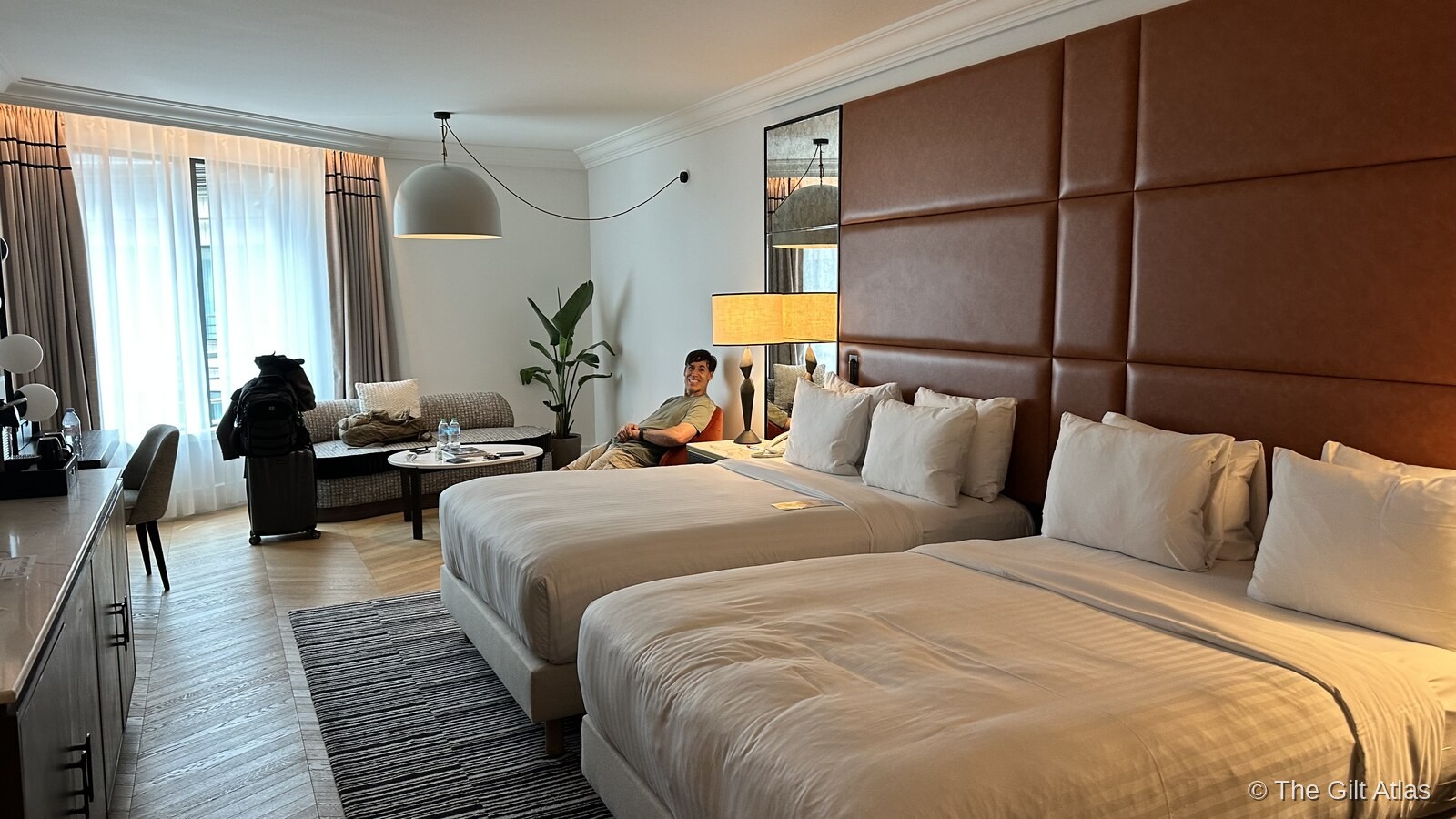
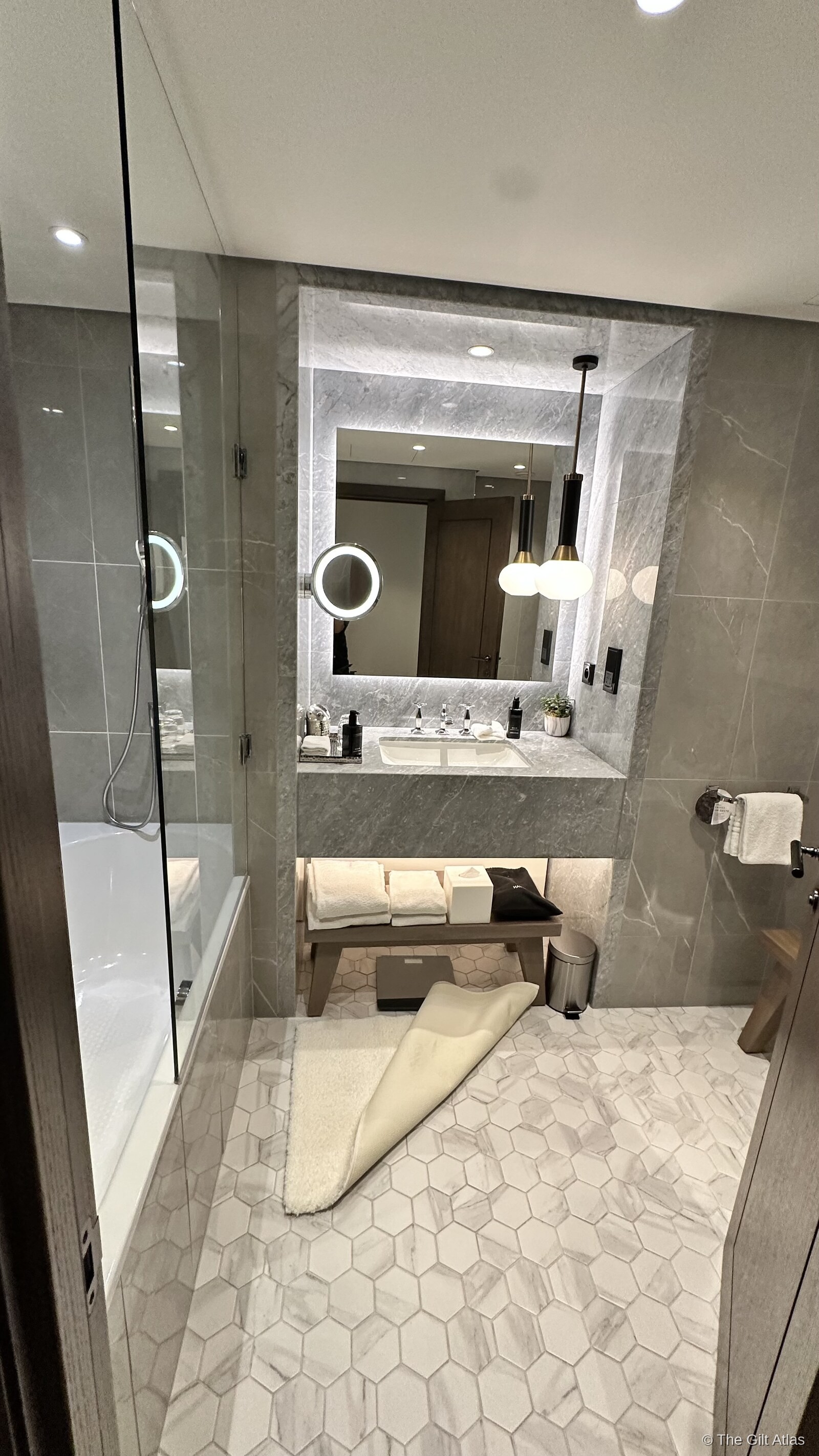
Beyond the arrival debacle, the Paris Marriott Champs Élysées is a genuinely good hotel. The building has been on this address since 1898, and while it has been updated and modernised over the decades, it retains a solidity and an appropriate grandeur that suits the avenue it sits on. The rooms are well-appointed, comfortable, and quiet despite the location — the double-glazed windows do effective work insulating guests from the noise of what is, particularly in the evenings, one of the busiest streets in Europe.
The service throughout the stay — once we were actually inside the hotel — was friendly and attentive. Staff were helpful with the various requests that arose during the visit, and the warmth of the team during the rest of the stay stood in notable contrast to the abandonment we experienced on arrival. Whether the arrival evening was a one-off failure under genuinely unusual circumstances, or whether it reflects a broader gap in the hotel's operational planning, is something only additional stays could confirm.
Breakfast: good, and included for elites
The complimentary breakfast for Marriott Bonvoy elite members is honored here and delivered well. The breakfast spread is solid — a proper French and continental selection, competently presented and attentive in service. It is not the most spectacular hotel breakfast in the Bonvoy portfolio in Europe — the Westin Palace Madrid sets a high bar on that metric — but it is genuinely good and more than adequate for starting a morning of Paris sightseeing. The setting, with the Champs-Élysées visible from the breakfast room, adds an atmospherics bonus that no food quality score quite captures.

The verdict: great address, one significant caveat
The Paris Marriott Champs Élysées is, on balance, a good hotel with a great location. The location alone justifies serious consideration for any Bonvoy redemption in Paris — there are few addresses in the city that put you this close to this much of what makes Paris worth visiting, and the Metro Line 1 access means the rest of the city is within reach quickly when you want it.
The arrival experience was genuinely poor — not because of the circumstances, which were unusual, but because of the hotel's failure to plan adequately for a foreseeable outcome and to support its guests when the plan failed. A victory parade on the Champs-Élysées was not a surprise event. The hotel knew about it with at least 24 hours' notice. The contingency should have been better — more accurate instructions, a staffed alternative entrance, a more capable phone response when guests called for help. These are not unreasonable expectations of a premium Marriott property.
If you stay here under normal circumstances — without a national football celebration rerouting the street — you will almost certainly have a smooth, enjoyable stay in one of Paris's best addresses. The advice I would offer is simply this: if there is any possibility of a major public event on the Champs-Élysées during your stay, contact the hotel in advance for precise, up-to-date arrival instructions and confirm that staff will be available to assist. Do not rely on the contingency plan they send proactively — as we learned, it may not be accurate.
An excellent location that almost any Paris stay benefits from, paired with a genuinely poor arrival experience that the hotel had 24 hours to plan for and did not plan adequately. The in-stay experience — rooms, breakfast, service — is good. The silver lining of watching France's victory parade from the hotel bar is one of those travel stories you tell for years. The contingency handling is a lesson in what premium hotels owe their guests when foreseeable disruptions occur. Book for the address; be prepared for the street.
Affiliate disclosure: Some links in this article are affiliate links. If you book through them, The Gilt Atlas may earn a small commission at no additional cost to you. This stay was booked independently using Marriott Bonvoy points. The hotel had no involvement in this review and no editorial oversight.